I had wanted to visit the TWA Flight Center Terminal at New York City’s JFK Airport for many years, but always missed my chance when it would occasionally open for special architecture tours. So when I heard that it was going to be converted into a hotel preserving its iconic design features, I was ready to pack a bag! Find out what it’s like to stay at the TWA Hotel at JFK and see pictures of the restored and reimagined JFK TWA Terminal.

I love to curate and share mid mod faves from around the web! Some of the products you’ll see on this page are affiliate links, which means I’ll earn a small commission at no extra cost to you. Thanks for your support in this way. Learn more here.
TWA Flight Center & Hotel: The Basics
What it is: Completed in 1962 by architect Eero Saarinen, the TWA Flight Center terminal was a jet-age marvel as the headquarters of Trans World Airlines. It closed in 2002 after years of financial difficulties, and remained empty for many years, even after being added to the National Register of Historic Places in 2005. In May 2019, it re-opened as a hotel after a nearly $300 million renovation.
What’s there to do? Swank hotel rooms, cocktail lounges and restaurants, aviation history exhibits curated by the New York Historical Society, and a rooftop pool with runway views!
Visit on a long layover: Head outside security and take the Air Train to the JetBlue Terminal 5. Then hop on the escalator down to the baggage claim, and follow the signs to the elevator to the TWA Hotel. For best availability, book a reservation at one of the restaurants or reserve a room for a “daytripper” stay.
Visit on a getaway or stopover in NYC: Check rates & availability
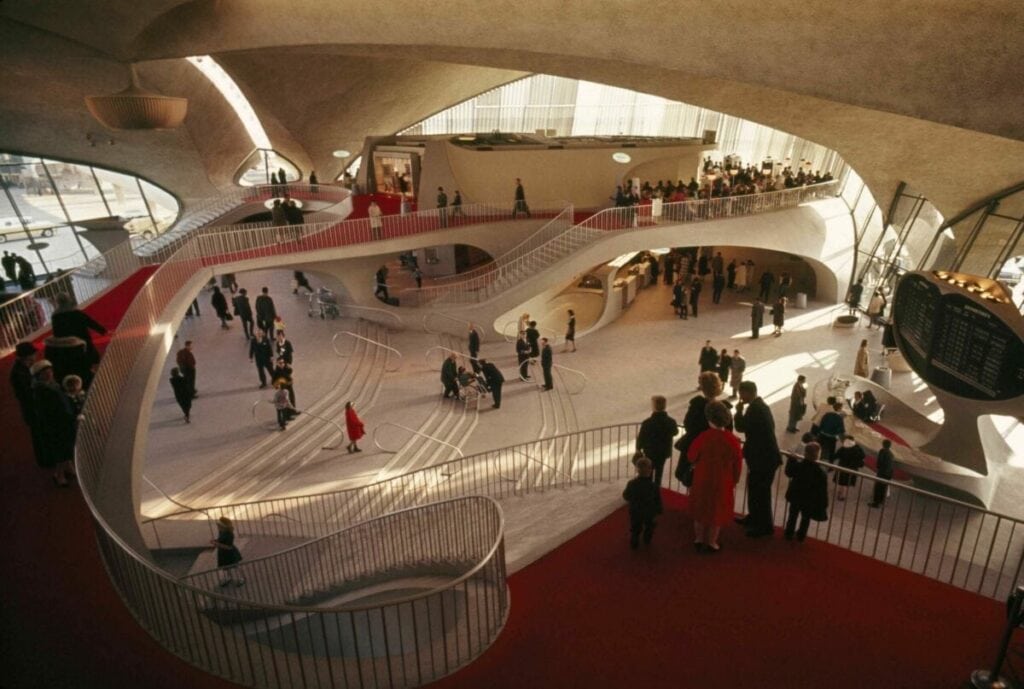
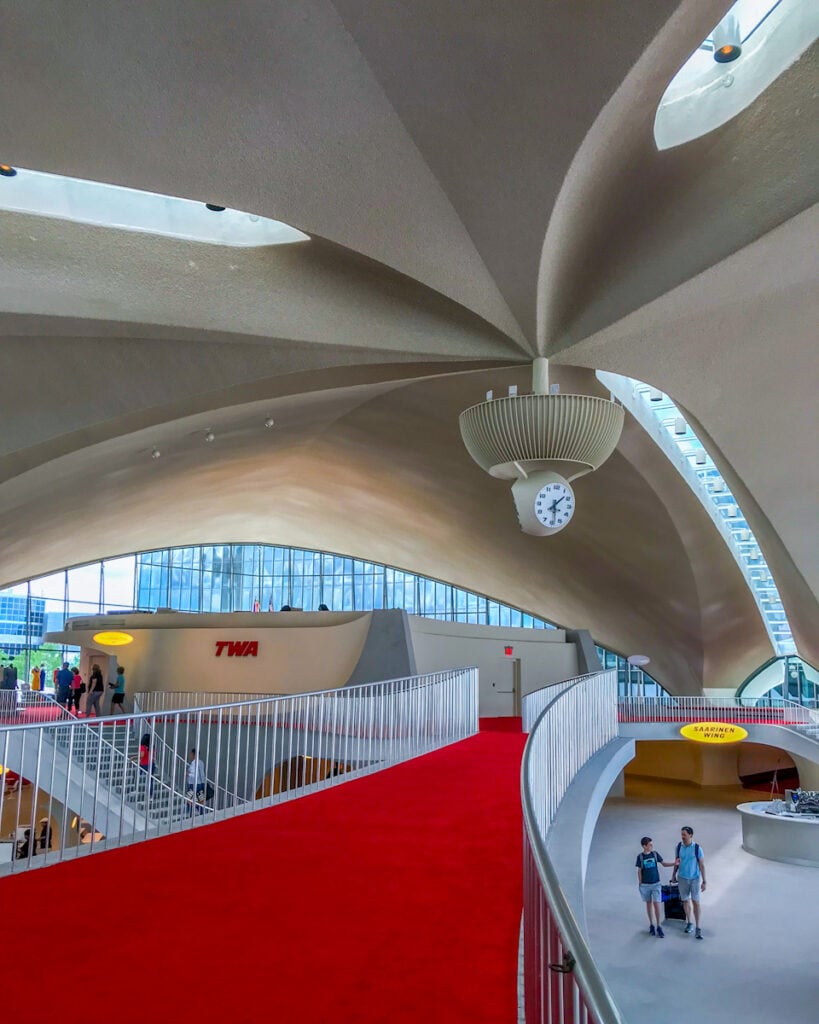
Architectural elements retained/restored: The main terminal itself (known as the “head house”), two split-flap message boards by Solari, the Vulcain clock suspended from the center of the terminal, iconic red-carpeted flight tubes that carried passengers from the terminal to gates.


TWA Flight Center History
Completed in 1962 by architect Eero Saarinen, the TWA Flight Center terminal was a jet-age marvel as the headquarters of Trans World Airlines. It was one of the first airport terminals with enclosed passenger jetways, baggage carousels, and gates separate from the main terminal.
Saarinen received the commission in 1955 to design the TWA Flight Center as part of an expansion of the New York International Airport. The main terminal itself, known as the “head house,” featured soaring architectural wings and massive windows with views of arriving and departing jets. Futuristic red-carpeted tubes led passengers to the terminal and gates. Strips of skylights separated the four wings of the head house.
The TWA Flight Center quickly became an architectural icon and one of the most-recognizable airport buildings in the world.

About Architect Eero Saarinen
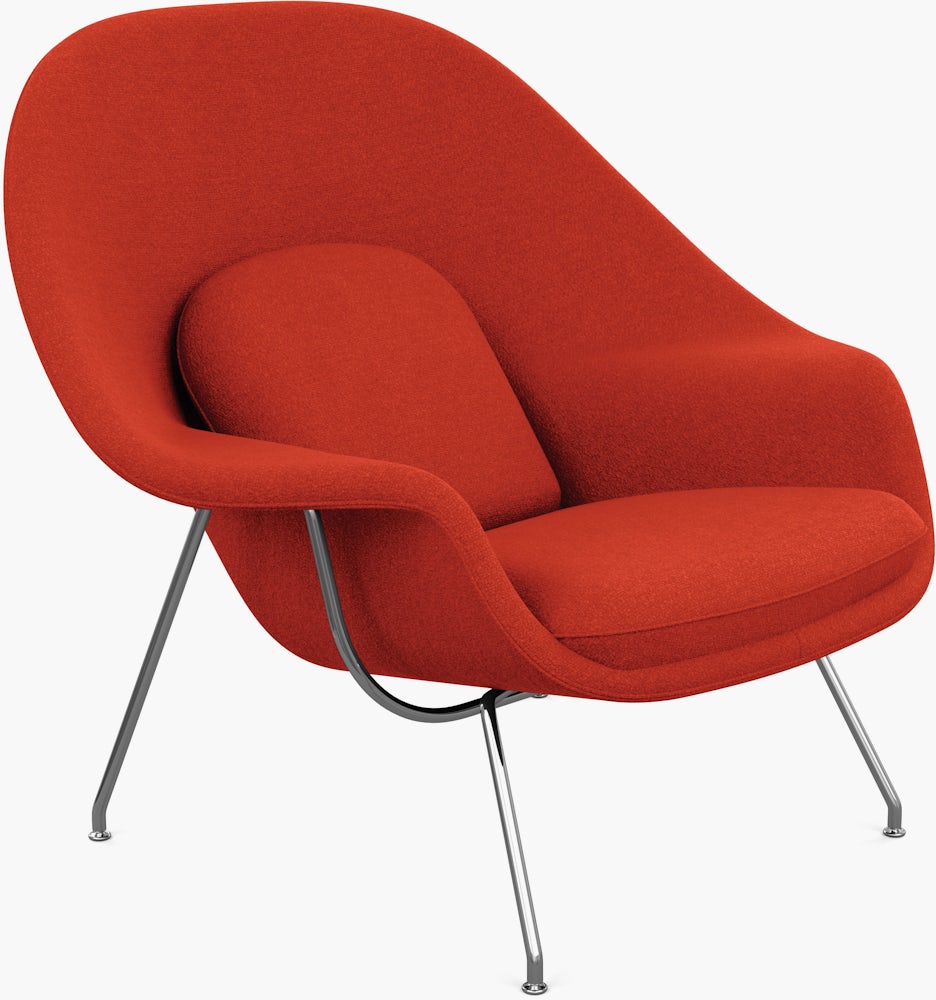
Born in 1910, Eero Saarinen was a Finnish-American architect and designer who studied architecture at Yale University. Other famous Saarinen works include Dulles International Airport in Washington, D.C. and the St. Louis Gateway Arch. He also designed furniture for the Knoll studio, including the Womb Chair.
Saarinen died unexpectedly in 1961 of a brain tumor, before the completion of the project. The terminal was completed under the supervision of other architects in his firm and opened on May 28, 1962. Saarinen was awarded the American Institute of Architects (AIA) Gold Medal posthumously for its futuristic, visionary, and efficient design.


Recognition as a Landmark and Decline
In 1994 the City of New York designated both the interior and exterior of the TWA Flight Center a historic landmark. But with the airline’s sale to American Airlines in 2001, the terminal closed in October of that year. The TWA terminal sat empty and unused for years, even after being added to the National Register of Historic Places in 2005.
Also in 2005, a new Jet Blue Terminal was added behind the building, and portions of the original TWA Terminal were demolished to make room for it.
Other historic JFK airline terminals met an even worse fate: among others, the American Airlines Terminal 8 was replaced in 2008. Delta replaced the former Pan Am WorldPort Terminal in 2013. And architect I.M. Pei’s Sundrome Terminal 6 was demolished in 2011.
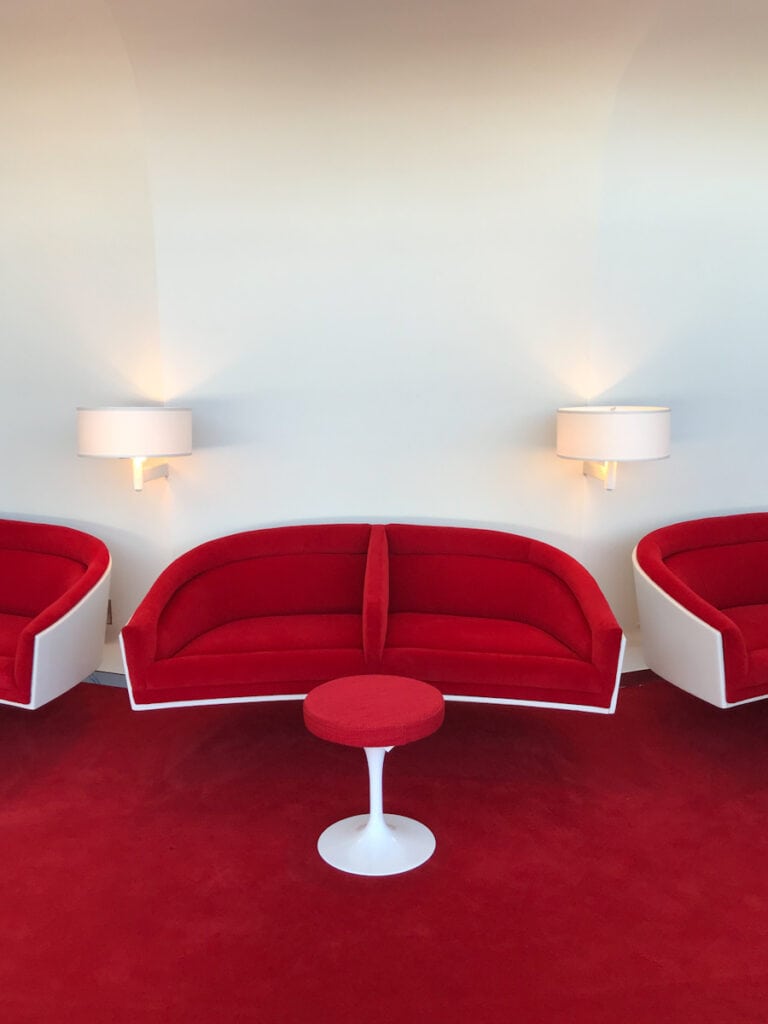
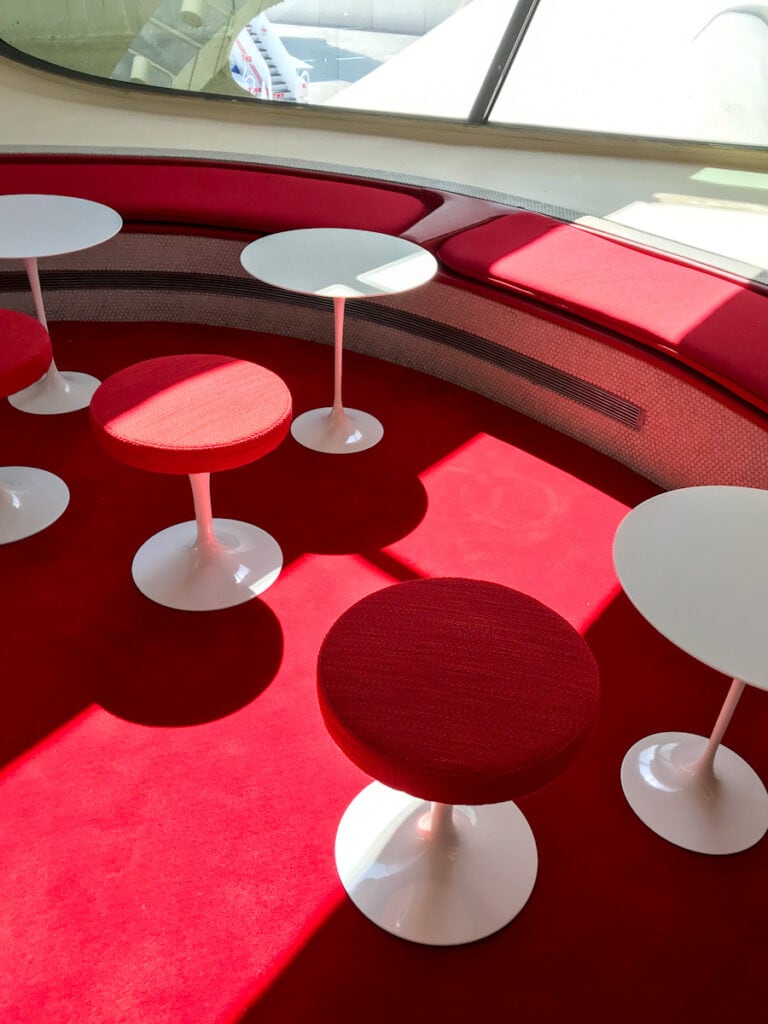
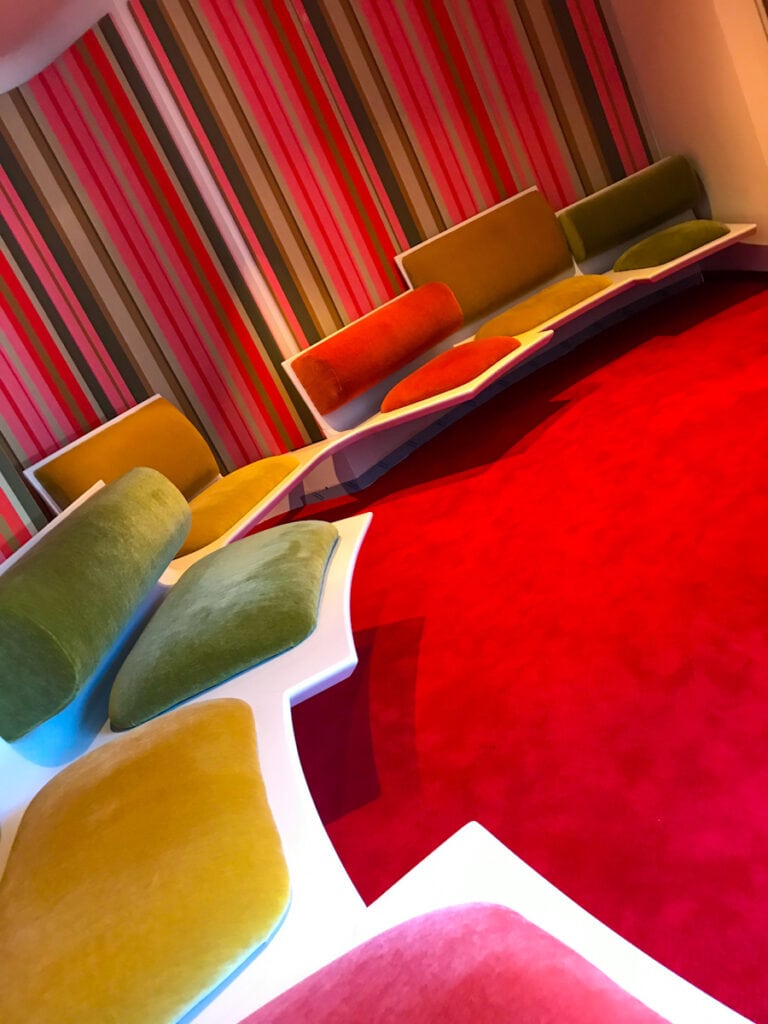
Amenities at the TWA Hotel at JFK Airport
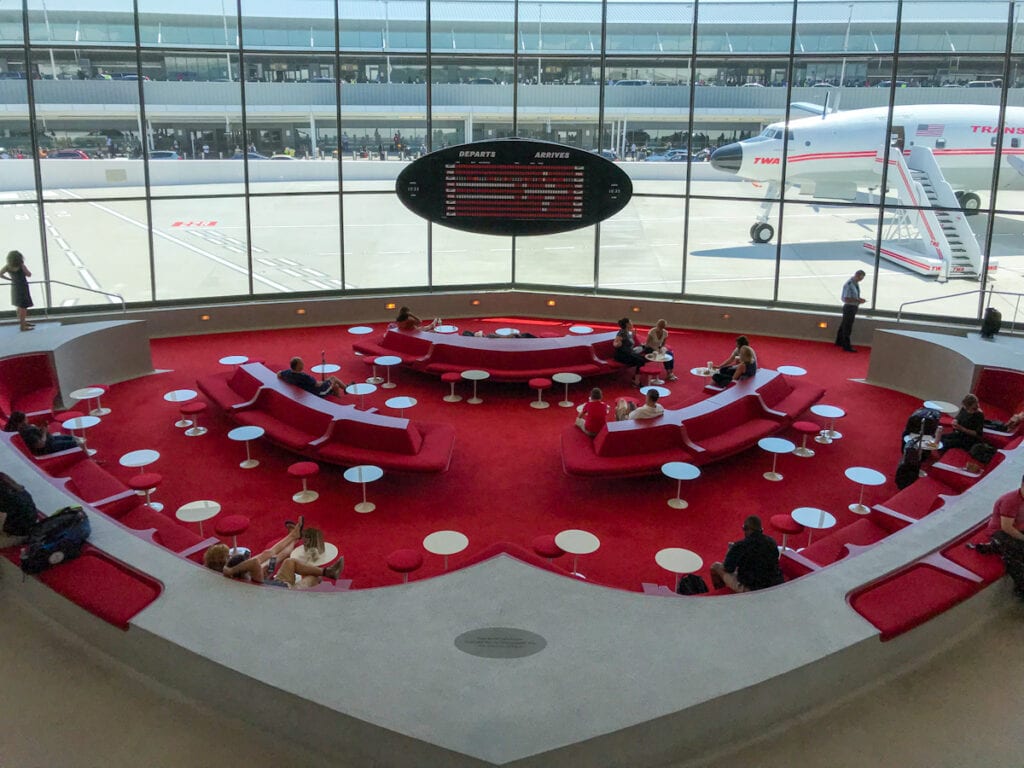
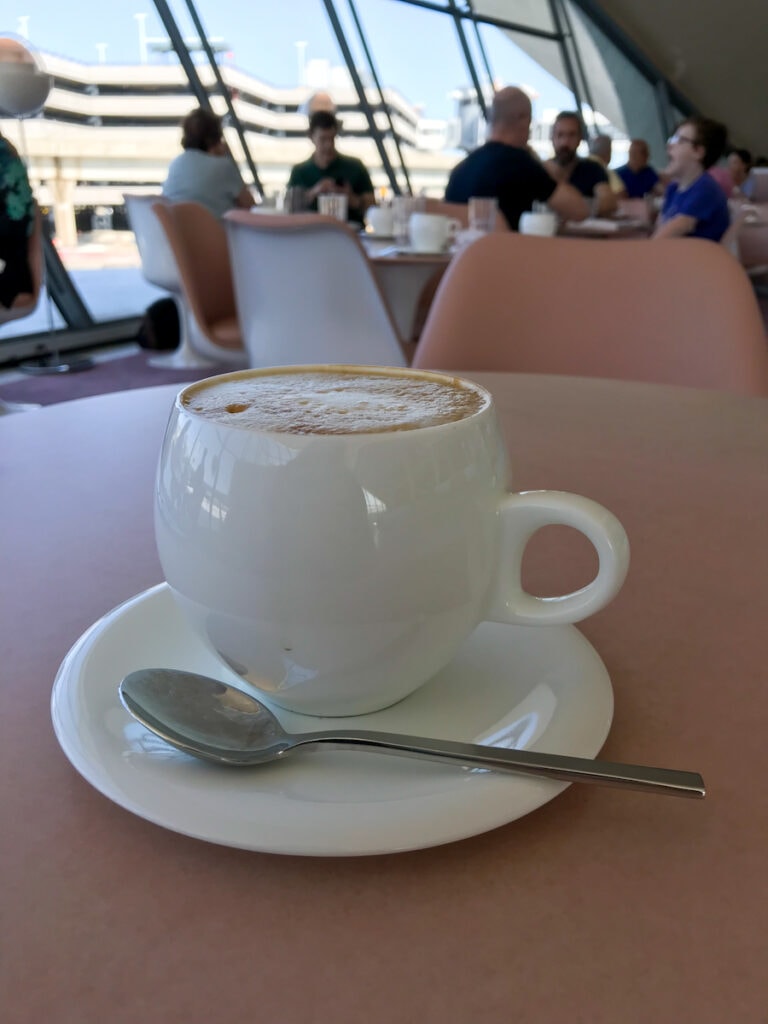
Several of the hotel’s lounges have been restored and are in use again as restaurants, cocktail bars, and cafes. The Paris Cafe serves breakfast, lunch and dinner, while the Sunken Lounge serves up cocktails with a view of the terminal’s iconic split-flap departures board.
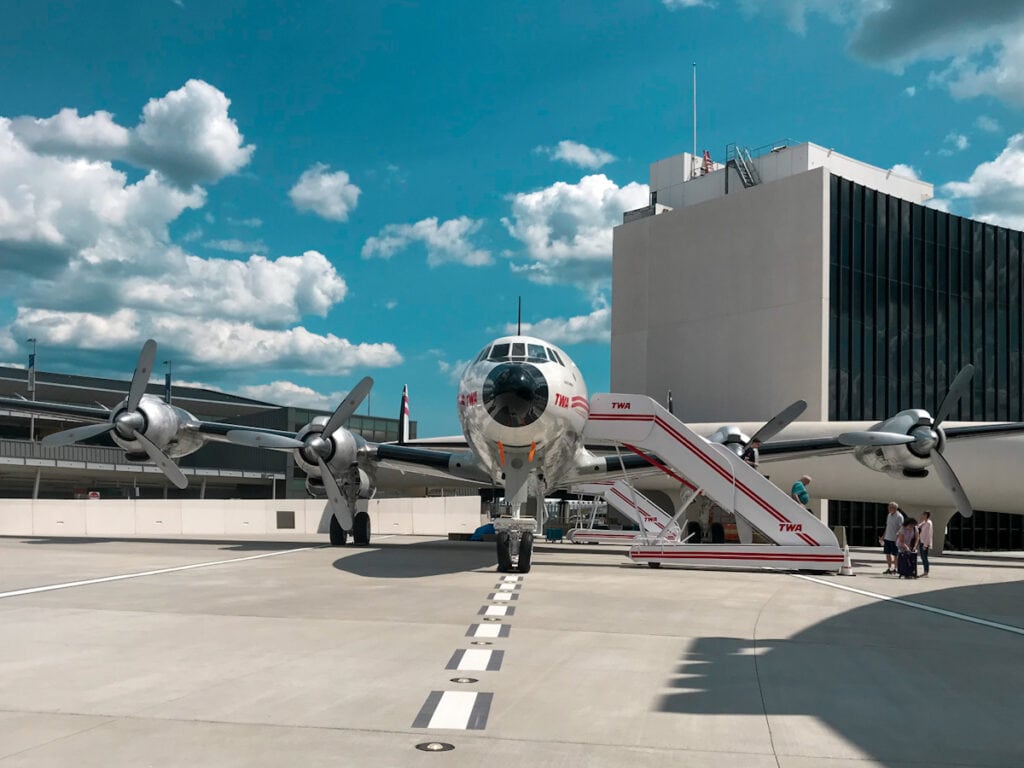
Just outside, the surprise star of the show is a cocktail bar in a restored Lockheed Constellation propeller plane (AKA “Connie”).
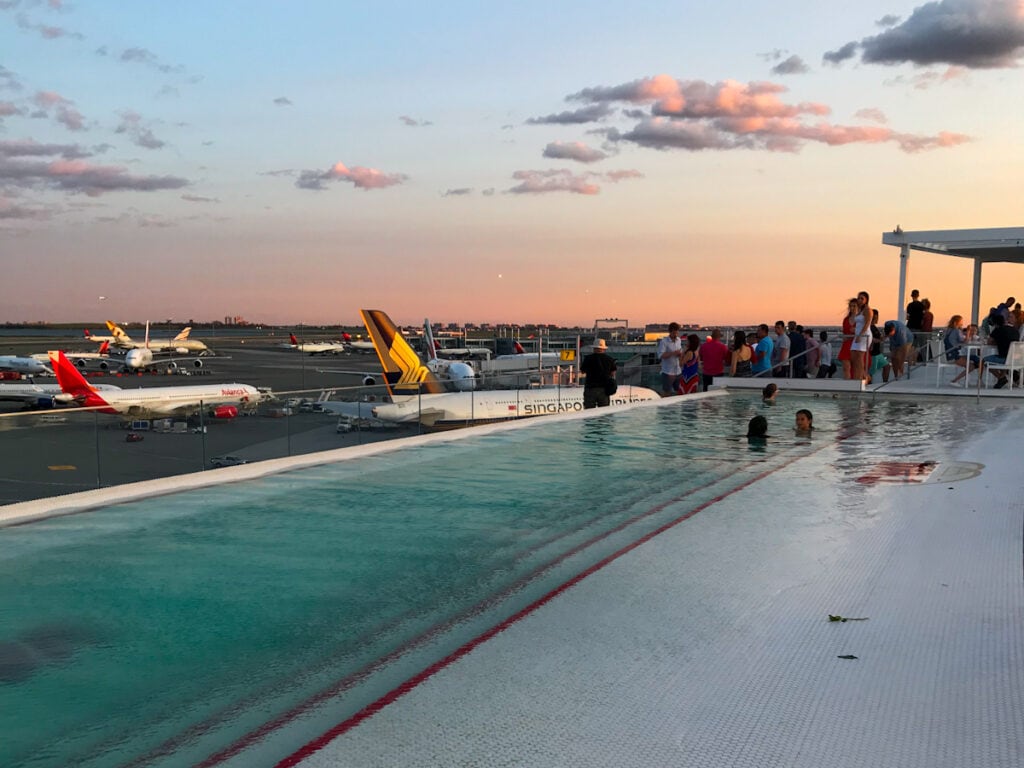
Take the elevator to the rooftop pool, an observation deck, and bar with runway views.

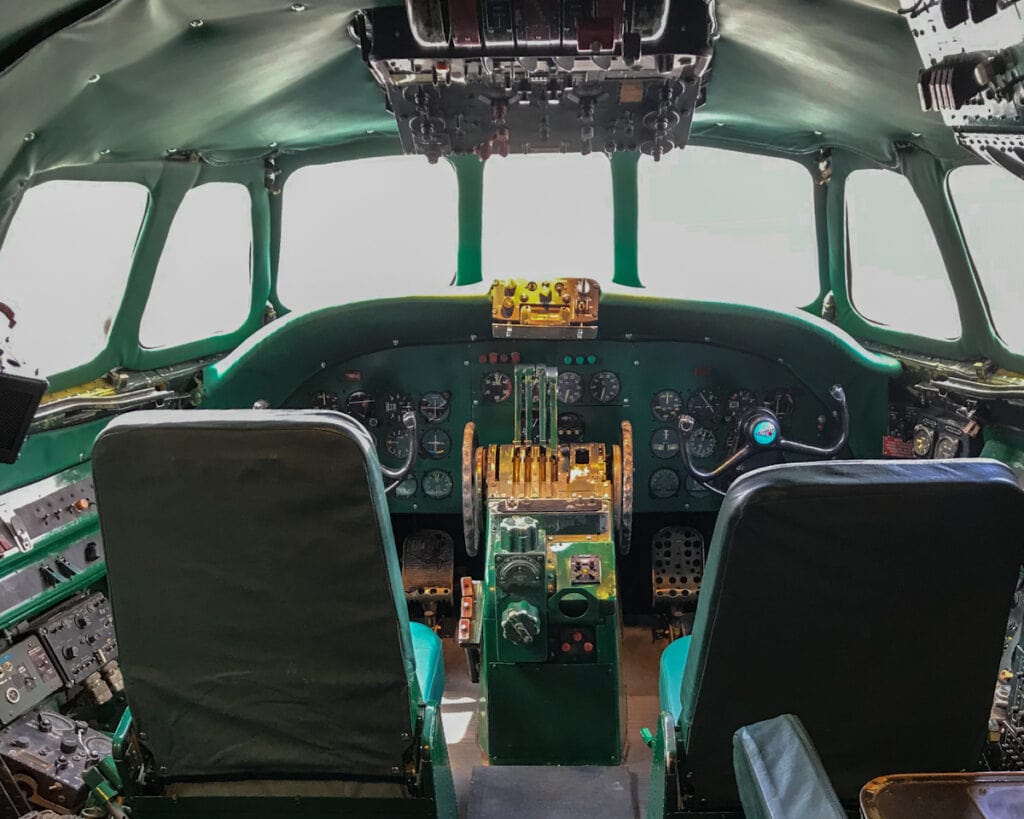

TWA History & Aviation History Exhibits
There are also exhibits of aviation history and TWA Airlines history curated by the New York Historical Society.
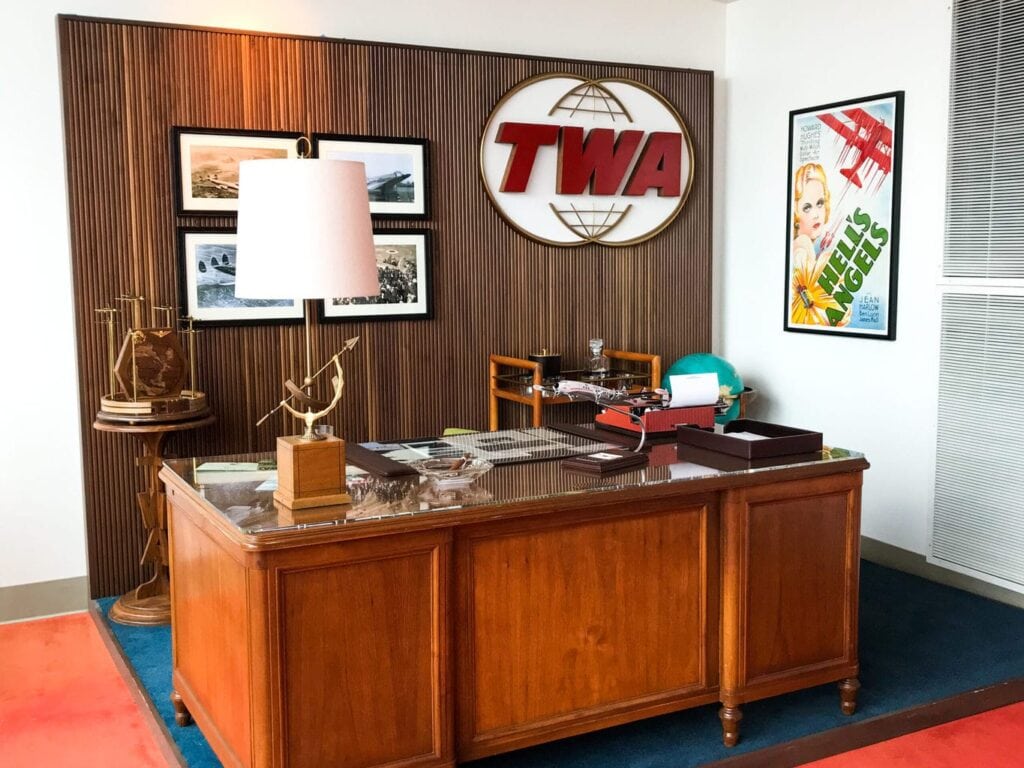
The hotel has over 65 original uniforms from pilots and “air hostesses” (flight attendants). Many uniforms and pieces of memorabilia were donated by former airline employees. There are also recreations of the offices of Howard Hughes and Eero Saarinen.


TWA Hotel Rooms
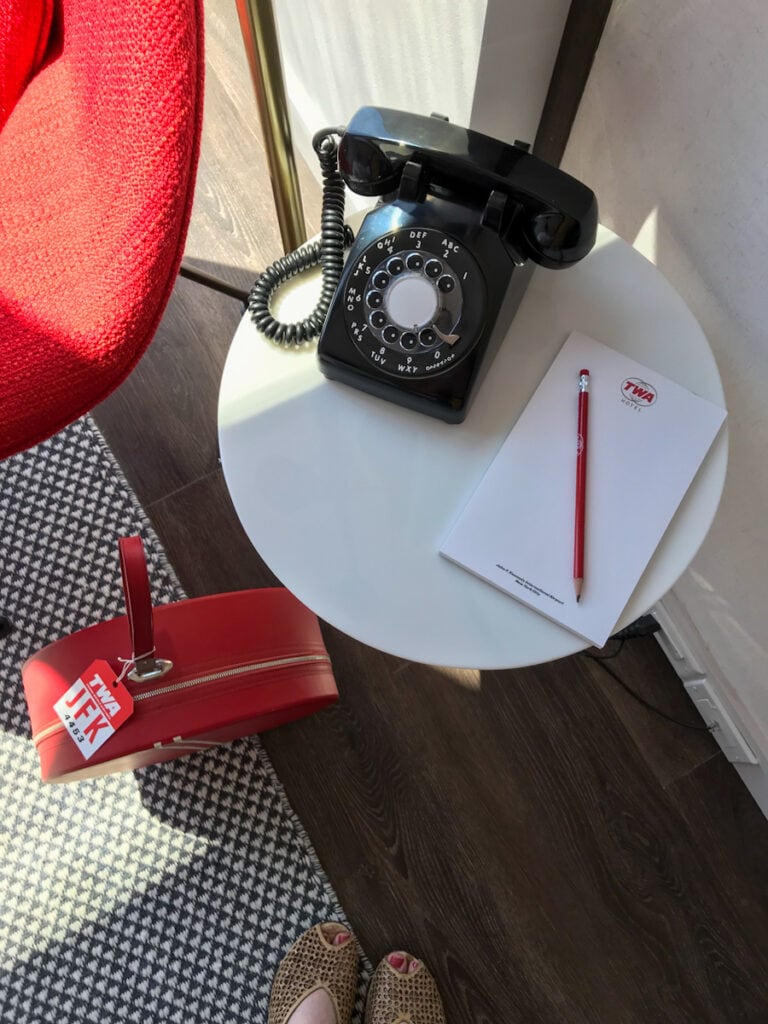
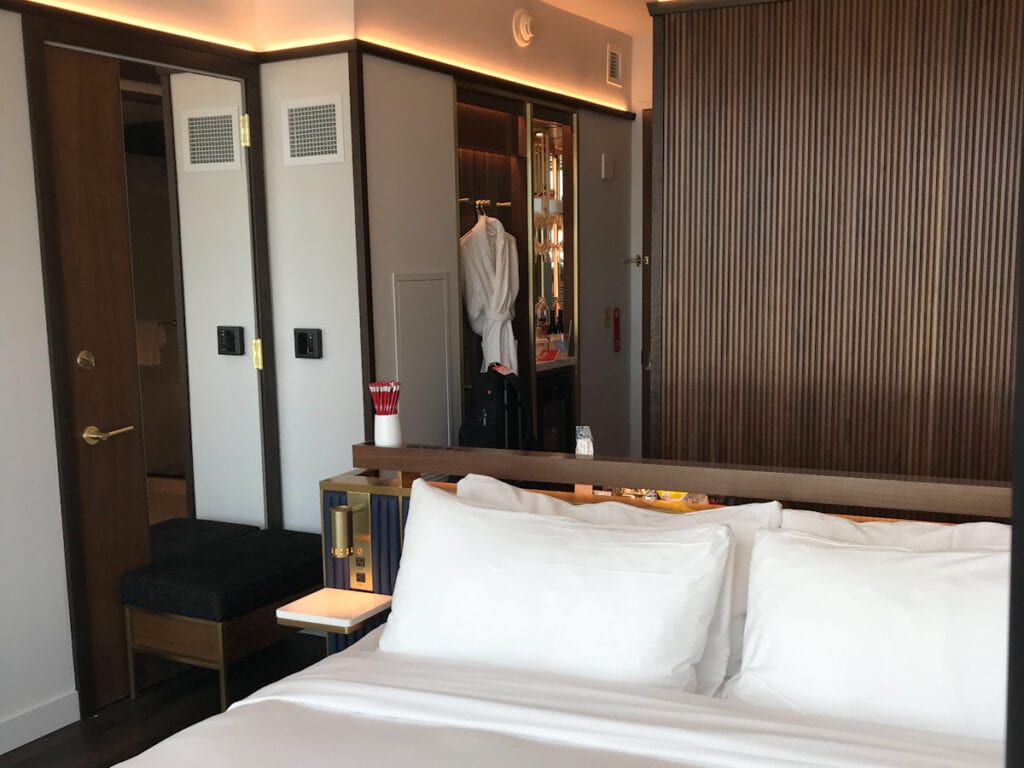
The $265 million renovation added 512 hotel rooms in two new tower wings named after Howard Hughes (a TWA owner) and Saarinen. I stayed in a deluxe king room with runway views. The rooms feature “Womb Chairs,” tulip side tables, and pole lights designed by Saarinen.


Visiting the TWA Hotel
Why should you visit the TWA Hotel? It’s a fun getaway for couples and friends. I actually flew up from Washington DC for the weekend and never left the airport! But beyond the actors in period costume, it is truly an awe-inspiring space. It captures the feeling of flight with its soaring wings, and still feels futuristic even sixty years later.
I recommend staying for a full day and night, if you can. It was such a pleasure to photograph the spaces, and see how the light changed through the day and into the evening.
Create the TWA Hotel look in your own space
Click on these iconic Eero Saarinen furniture pieces to shop on Design Within Reach.